YOUR BUILDING HAS BMS, EMS AND HVAC CONTROL. BUT NO SHARED OPERATIONAL PICTURE AND NO UNIFIED RESPONSE LOGIC.
Vaiking adds a shared operational layer to existing BMS, EMS and building controls: correlate states, verify interventions, generate evidence. Without replacing existing systems.
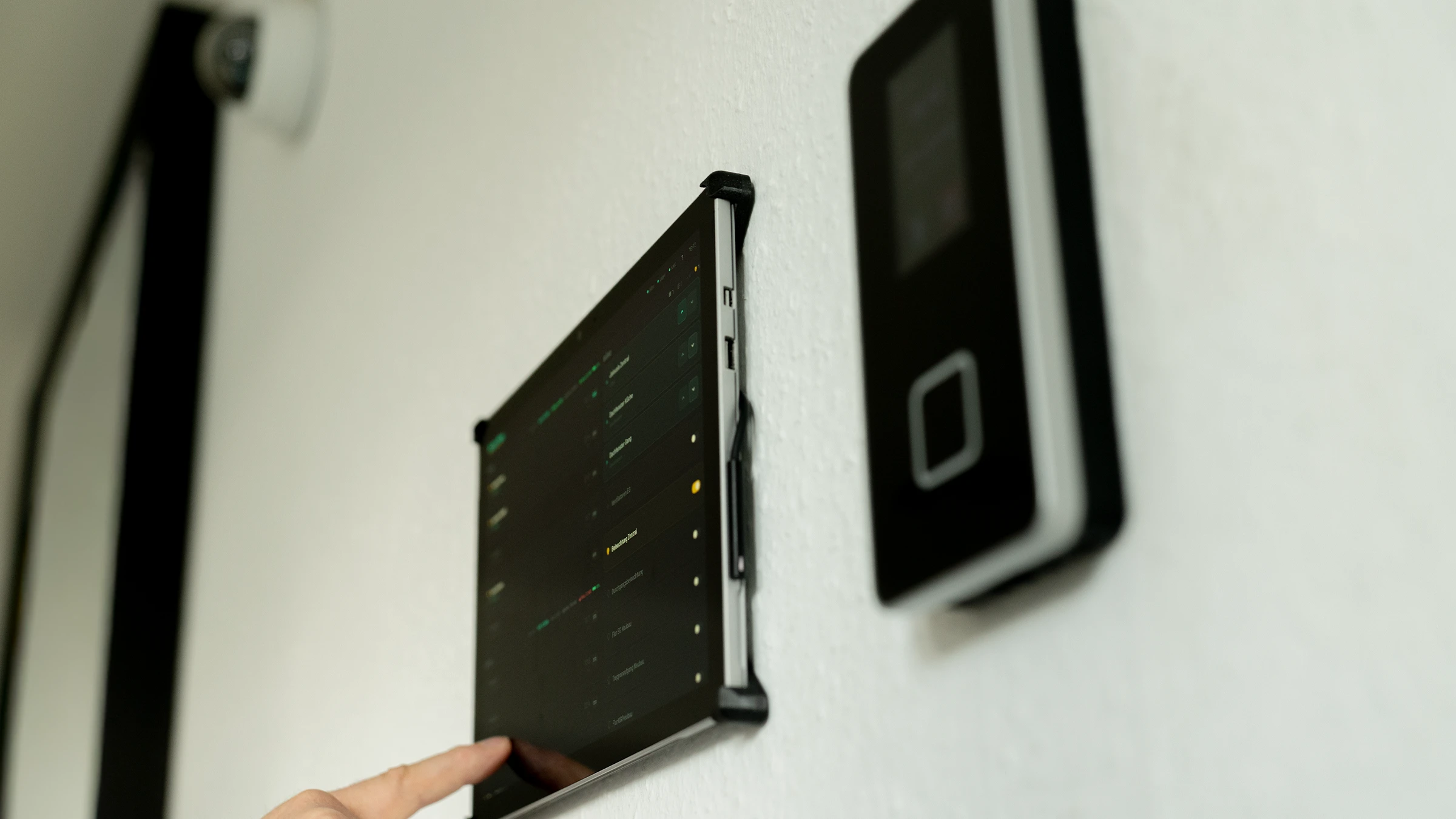
HVAC RUNS WHEN NOBODY IS THERE. MAINTENANCE STARTS AFTER FAILURE. ENERGY DATA IS CONSOLIDATED IN SPREADSHEETS.
01Static operating modes
School holidays. The building empty, three floors unused. The air conditioning runs. Fully, on schedule, as always. Nobody added the exception because nobody is responsible for it. With the February bill comes the retrospective investigation: how long this had been going on and why.
02Isolated solutions without a shared data layer
Building management, access control, energy metering, IT monitoring: four systems, four owners, and when a fault affects all of them, the first question is who is actually responsible. The fault affects building automation, access control and IT simultaneously. Three trades, three owners, three tickets describing the same problem, and nobody knows.
03Reactive maintenance
The lift was serviced twice because nobody saw the gradual deviation. The air conditioning fails, and now the diagnosis begins: when did this start? Was there a trend? Is there operating data? Without a historical baseline there are no answers, and maintenance comes after the damage, not before. Drives, condensate pumps, heat exchangers: wear is measurable before it becomes a failure.
04Energy evidence without a reliable data foundation
EnEfG and CSRD require consistent, auditable energy data. Insurers ask for evidence of preventive operations. In practice, the data comes from the BMS export, the FM software and the metering system, separated, in different formats, consolidated manually.
OCCUPANCY, OPERATIONS AND ENERGY IN ONE LOGIC.
Vaiking connects protocols such as KNX, BACnet and Modbus with occupancy data, energy profiles and external factors. Defined and traceable workflows instead of ad-hoc manual interventions. With pre-/post-verification for every action.
Incremental integration of existing systems
Vaiking connects existing systems via KNX, BACnet, Modbus and manufacturer-specific APIs. Integration follows four phases: surveying systems and interfaces, selecting relevant data points, mapping and normalising, building a shared data layer. New devices are discovered automatically where protocol support exists. BMS, EMS and HVAC controls remain authoritative in their domain: direct control, bus logic, component-level alarming. Vaiking adds: shared operational picture across system boundaries, intervention decisions with pre- and post-verification, revision-proof logging.
Condition-based automation¹
Automations are based on rules the operator defines. Every automation runs through three phases: checking the initial state, executing the action and confirming the effect.
- PRE: Check of current conditions (occupancy, time, equipment status)
- EXEC: Execution of the defined action (e.g. HVAC adjustment, start/stop)
- POST: Check whether the expected effect occurred
Energy management with PV, storage and charging points
Where energy infrastructure is present, Vaiking coordinates its use based on current generation, charge level, energy prices and operational requirements.
- High PV output at low load: prioritise storage charging
- High energy price: discharge storage within defined limits
- Avoid peak loads: automatic adjustment or notification
Load optimisation based on defined rules instead of manual interventions.
Condition-based maintenance²
Wear is detected before it becomes a failure: increasing run times at constant setpoint, gradual output decline, deviations from the typical operating pattern. The system evaluates deviations before triggering notifications. Only stable, relevant deviations lead to maintenance requests. No alert noise.
Role-differentiated views
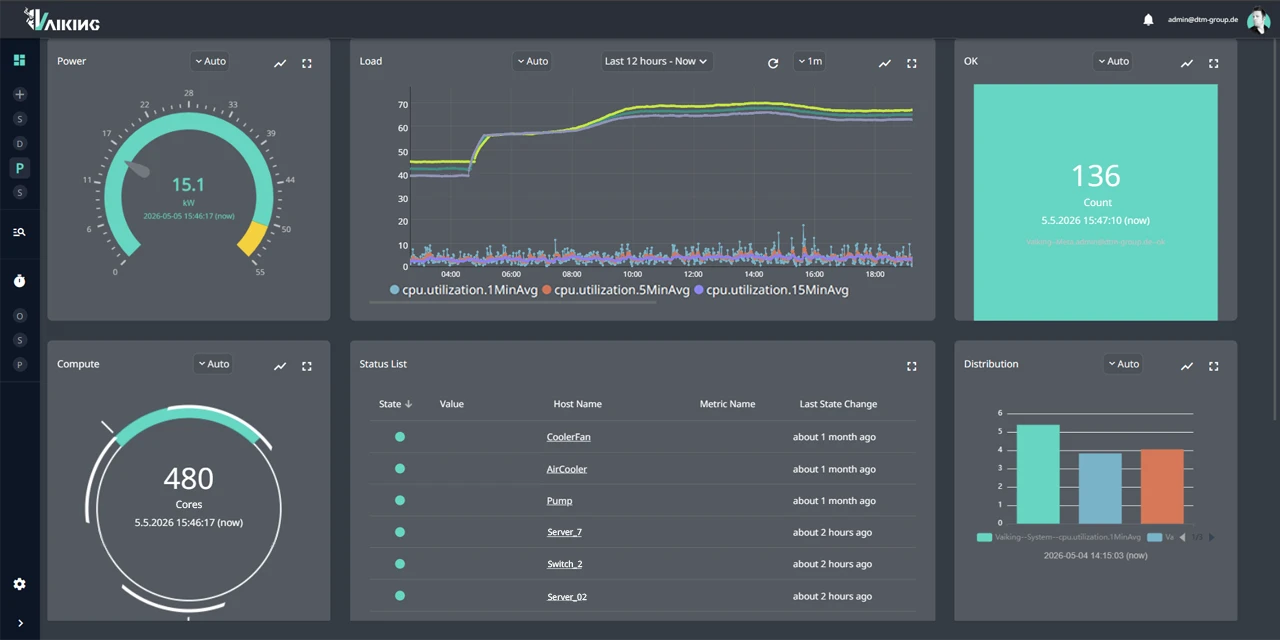
Operators and FM teams see operational states, automation interventions and maintenance notifications. Owners see energy consumption, availability and operational evidence. Tenants see only their own floor space. Access rights are assigned at user and group level. View rights and control rights are independently configurable.
¹ Pre-/post-condition checks: protected by utility model.
² Dynamic AI thresholds: protected by utility model.
WHAT VAIKING CHANGES IN BUILDINGS AND FACILITIES.
KNX fault with climate impact detected
A KNX fault interrupts the setpoint feed to the air conditioning unit. The unit continues running but without regulation. Temperature deviations develop gradually.
Fault detected before complaints are raised. Fully logged for insurer and operator.
Operational evidence for the owner: what was active when?
The annual inspection is coming up. The owner asks: was the HVAC in building B really demand-controlled during the occupancy period between March and September? The FM service provider searches three systems and gets three different answers.
Owner, operator and service provider access the same data layer. No room for interpretation. No retrospective data collection.
Condition-based maintenance before failure
An air conditioning unit is taking progressively longer to reach the setpoint. The trend has been visible for three weeks. No static threshold has triggered; the unit appears to be running normally.
Vaiking detects the gradual deviation, assesses it as a maintenance requirement and triggers a notification before the unit fails. The technician arrives before the unit fails. No reactive call-out, no unplanned downtime.
Evidence documentation for insurer and operator
The insurer requests evidence of preventive operations. The operator needs an operational report for the annual inspection. Previously: manual export from four systems, manual consolidation. Vaiking documents every automation step with timestamp, initial value, action taken and outcome. All deviations, notifications and interventions are retrievable in a revision-proof format.
Evidence generated directly from the live data layer, not by manually consolidating isolated systems.
WHAT EACH MODULE SOLVES IN YOUR OPERATION.
Monitoring
- HVAC, lighting, access control and energy meters in one data stream
- Occupancy patterns and energy consumption correlated and visible
- Energy evidence for CSRD and EnEfG from real measurement data
Automatisierungs-Modul
- HVAC shutdown on unoccupied spaces without manual checks
- Night and weekend profiles automatically activated and validated
KI-Modul
- Detect increasing HVAC run times as a wear indicator
- Distinguish seasonal patterns from real anomalies
30 MINUTEN. WE ASSESS WHAT CAN BE OPTIMISED IN YOUR BUILDING IMMEDIATELY.
KNX, BACnet, Modbus, PV system, booking system: we look at your existing infrastructure and show which automations are possible without replacing any system.